


The models walked down the runway, their clothes shimmering with the luster of fine fabrics, their cuts accentuating free-spirited silhouettes as they swayed elegantly, while embroidered patterns revealed superb craftsmanship.
Spectators watched with admiration, raising their phones to capture the looks. Some women discussed which outfit they would like to add to their wardrobes.
But this was not a runway show during fashion week. The models were a dozen vocational school students, young children and artisans from different parts of the country, some of whom had designed and made the garments.
After brief rehearsals, they presented distinct catwalk looks that celebrated China's diverse and long-standing fashion traditions, from the plant-based lanran (indigo dyeing) technique to intricate embroidery.
The runway presentation was one of four scenes in Ke Yi Guan (Insight Through), a special performance designed to let audiences feel, see and hear cultural heritage — and, most importantly, help keep it alive.
Produced by the Chinese Traditional Culture Museum, the performance debuted on Aug 19 at the Beijing institution and ran daily through Aug 23, the final day of its first session.
A new addition to the museum's public program, the show will be reinvented with new content for future performances.
"It is not just a performance. It is also a social education activity centered on personal growth and linked by cultural heritage," says Wang Chenyang, Party secretary of the Chinese Traditional Culture Museum.
He says the participants — some appearing onstage for the first time, and others recruited through the museum's WeChat account and trained for just a few days — had little performance experience but were full of enthusiasm.
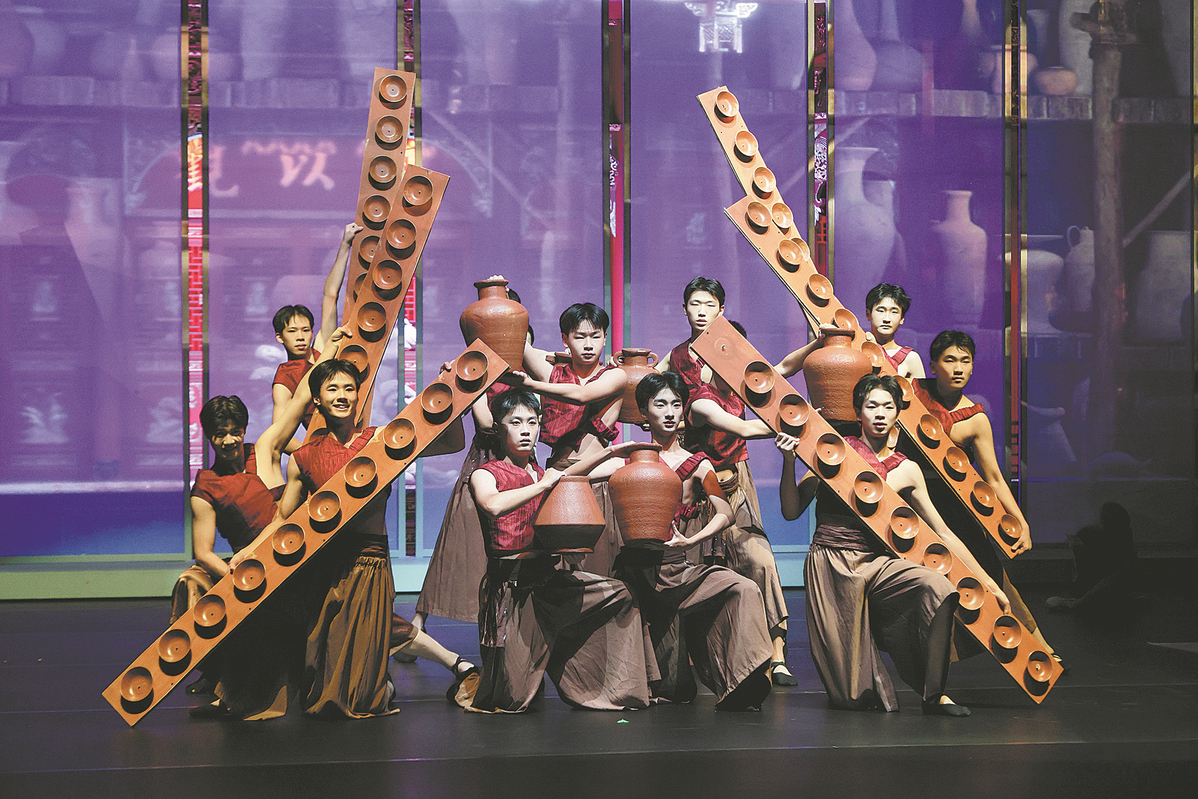
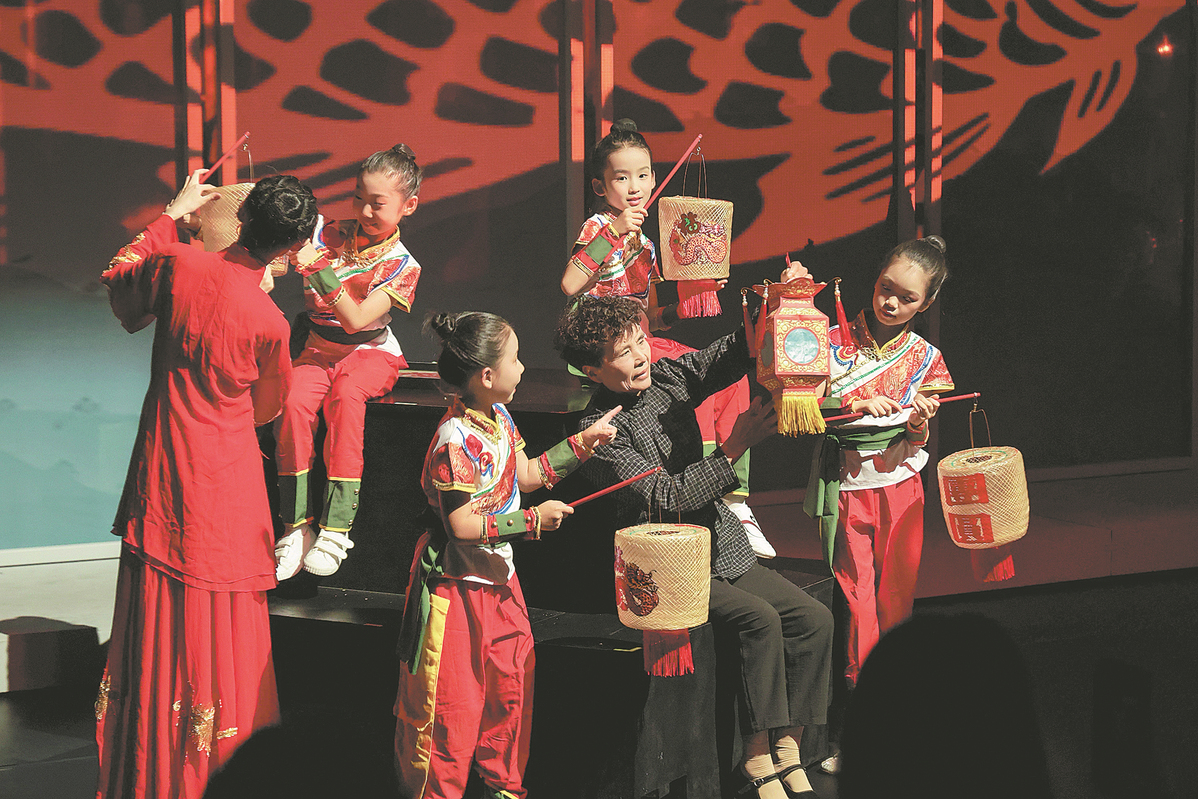
The show was structured around the four seasons, with each season featuring a different heritage category: tea cultivation and a tea-brewing ceremony for spring, porcelain-making for summer, fabric-dyeing techniques for autumn, and lantern performances for the New Year celebrations in winter. Calligraphy, seal engraving and poetry were integrated into the dancing and singing, alongside presentations of dozens of cultural heritage practices, such as celadon firing and paper-cutting.
The performance reached its climax when performers paraded a colorful, vivid "bench dragon", re-creating a community tradition from Xuzhai village, Dongyang, Zhejiang province. Each household keeps a bench decorated with a lantern resembling a dragon's section. During New Year celebrations, residents bring out the benches, connect them to form a lantern dragon, and parade it through the village.
Wei Pengju, a professor at the Central University of Finance and Economics, says the transmission of cultural heritage needs new models, platforms and settings. "The show is creative and emotionally appealing, while also enabling young people to become involved."
Jin Enxi, 10, from Beijing, has volunteered as a tour guide at the museum for some time. She joined the performance after 10 days of training. "I gained friendship, confidence and perseverance, and I also felt more deeply the power of cultural heritage."
Wang says another round of performances is being planned, with new content and different performers, conveying the spirit of craftsmanship, the aesthetics of everyday life, and devotion to family and country.
After the show, the museum launched a study tour service covering five cultural heritage-themed routes. Destinations include Mount Wuyi in Fujian province, which has a long history of tea cultivation, and Chengdu in Sichuan province, where the time-honored Shu embroidery continues to thrive.
Editor: Zhou Zheng Reviser: Lu Bingwu Final Reviewer: He Shengying